Oscillometric Blood Pressure Watches
Four wrist-worn platforms built around an air-pump and dedicated TPU airbag measurement path. Choose a round or rectangular form factor, Bluetooth companion or standalone 4G architecture, and the level of health, safety and connected-watch functionality your programme needs.
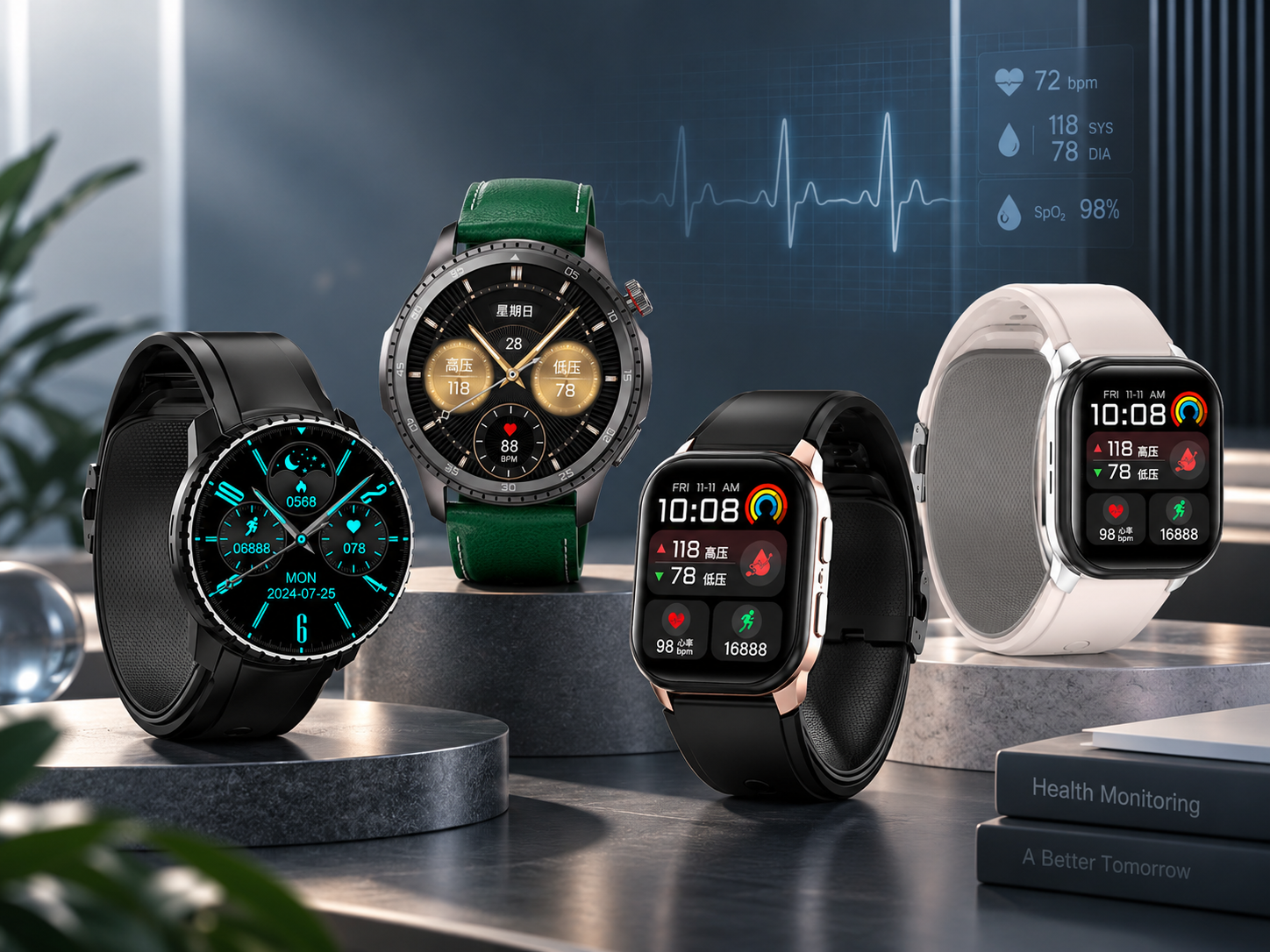
Oscillometric Hardware Series
Four specialized wrist-worn blood pressure platforms spanning round executive timepieces and rectangular high-density medical dashboards.
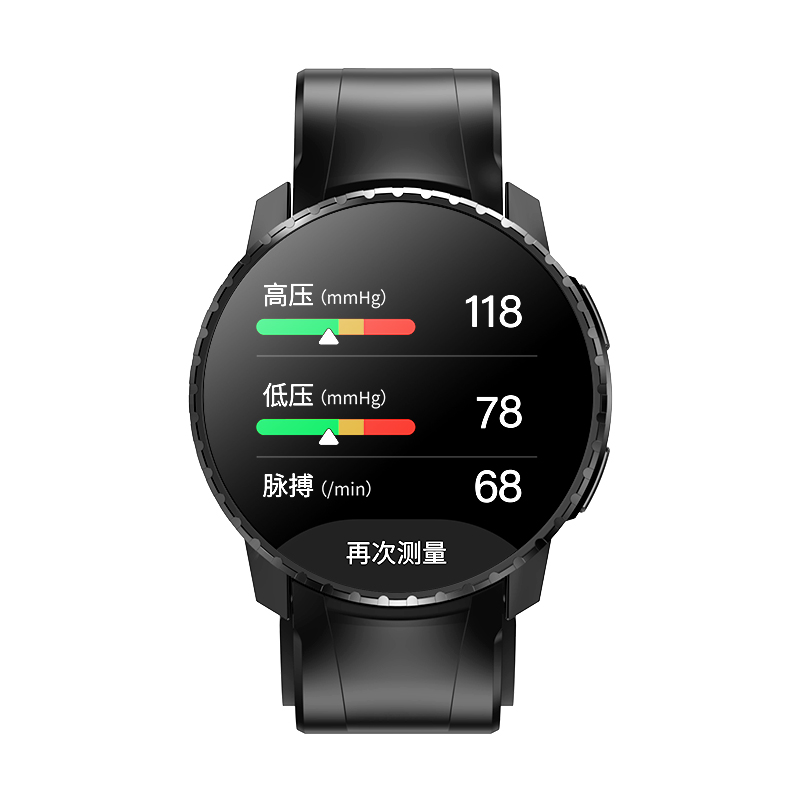 4G Standalone Round VC60 Blood Pressure Watch
 - 1.43" AMOLED Circular (466×466)
- ASR1606 4G + BeiDou/GPS Dual Chip
- 650 mAh Battery with NTC
- Ceramic Bezel + TPU Airbag Strap
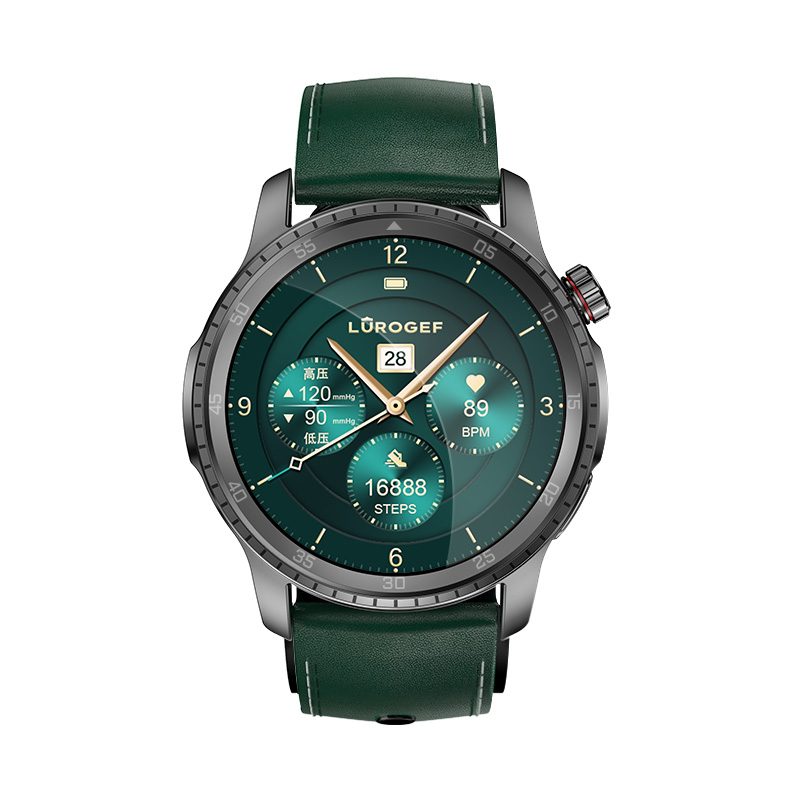 Classic Bluetooth Round VC61 Blood Pressure Watch
 - 1.43" AMOLED Circular (466×466)
- JL701X BLE Companion Architecture
- 500 mAh Battery with NTC
- Stainless Bezel + Leather/Airbag Strap
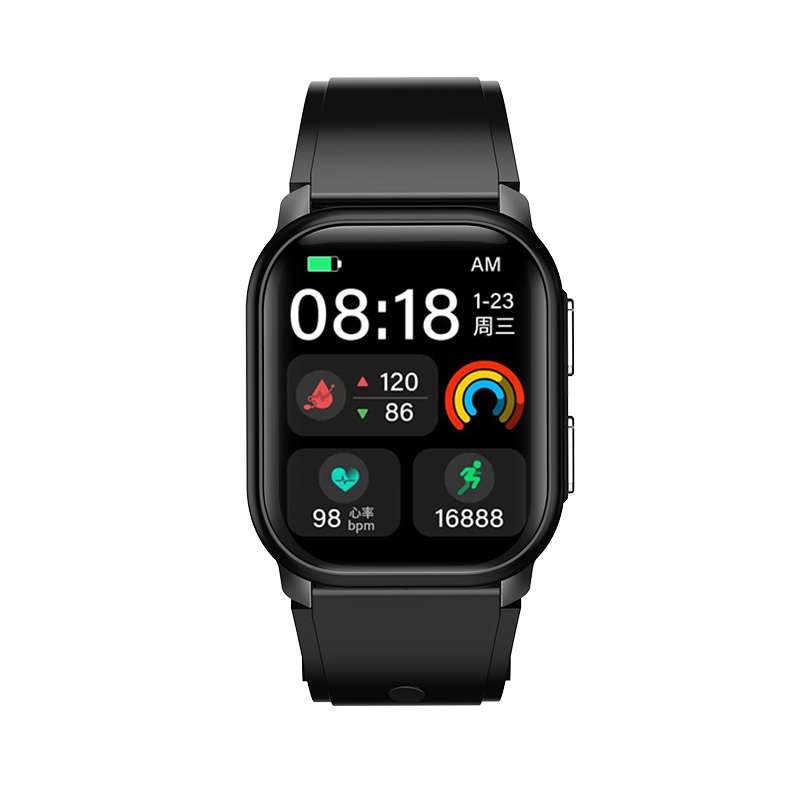 Slim Rectangular BLE VP20 Blood Pressure Watch
 - 1.95" AMOLED Rectangular (410×502)
- Ultra-Slim 12.6 mm Profile, 74.4 g
- 390 mAh High-Density Cell
- Zinc Alloy Frame + Ergonomic Airbag
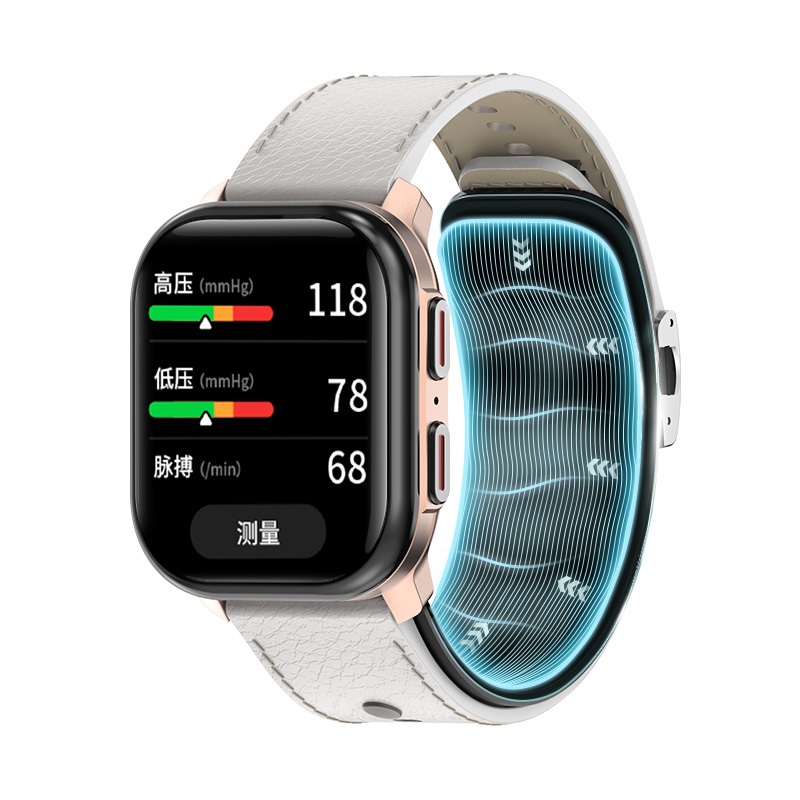 4G Cellular Rectangular VP21 Blood Pressure Watch
 - 1.95" AMOLED Rectangular (410×502)
- ASR1606 4G Standalone Telemetry
- 650 mAh Extended-Run Battery
- Ceramic Bezel + Cellular SOS Loop
Three platform decisions behind the product range.
Choose by shape, connectivity and wear profile.
Start with the screen shape. Then choose standalone 4G or a Bluetooth companion model. Compare size, weight and battery capacity before defining software and branding requirements.
Discuss your use case →VC60 · standalone 4G
A 1.43-inch round model with a 650 mAh battery, standalone calling, BeiDou/GPS, SOS and electronic-fence functions.
VC61 · Bluetooth companion
A 1.43-inch round model with a stainless-steel bezel, leather-style strap, 500 mAh battery and companion-app health reports.
VP20 · Bluetooth companion
The lightest model in the range: 74.4 g, 12.6 mm thick, with a 1.95-inch display, 390 mAh battery and silicone strap.
VP21 · standalone 4G
A 1.95-inch model with a 650 mAh battery, standalone calling, BeiDou/GPS and the larger rectangular display.
How the air-pump measurement works
Each model combines an air pump with a dedicated TPU airbag in the strap. During measurement, the airbag applies pressure at the wrist and the watch processes the resulting pressure signal.
This is the shared measurement architecture across the range. Model differences are mainly screen format, connectivity, battery capacity, materials and weight.
- Hardware: model, airbag configuration, strap fit and charging method.
- Connectivity: Bluetooth companion or standalone 4G workflow.
- Claims: intended use, validation evidence and local market requirements.
Measurement sequence
Compare the Four Hardware Platforms
Compare screen format, connectivity, battery, dimensions, weight and materials. Specifications come from the current model sheets and do not represent clinical-validation results.
| Model SKU | Form Factor | Display & PPI | Platform & Connectivity | Battery & Power | Dimensions & Weight | Materials & Airbag | Where the Hardware Fits |
|---|---|---|---|---|---|---|---|
| VC60 | Circular Bezel | 1.43" AMOLED (466×466, 326 PPI) | ASR1606 + JL701X (4G Cellular + BeiDou/GPS + BLE) | 650 mAh Li-Po with NTC | 47.3 × 46.6 × 13.8 mm, 90.9 g | Ceramic bezel + ABS body + Fluororubber strap + TPU airbag | Cellular telemetry without a paired phone — suited to distributed field and lone-worker programmes |
| VC61 | Circular Bezel | 1.43" AMOLED (466×466, 332 PPI) | JL701X (Bluetooth Low Energy companion) | 500 mAh Li-Po with NTC | 46.6 × 48.2 × 13.83 mm, 89.2 g | Stainless-steel bezel + Zinc alloy frame + Cowhide/Microfiber strap + TPU airbag | A dress-watch finish for executive wellness and private-label ranges |
| VP20 | Rectangular Dashboard | 1.95" AMOLED (410×502, 332 PPI) | JL701X (Bluetooth Low Energy companion) | 390 mAh Li-Po with NTC | 41.0 × 48.6 × 12.6 mm, 74.4 g | Zinc-alloy bezel + ABS body + Silicone strap + TPU airbag | The slimmest and lightest body here, for longer daily-wear periods |
| VP21 | Rectangular Dashboard | 1.95" AMOLED (410×502, 332 PPI) | ASR1606 + JL701X (4G Cellular + BeiDou/GPS + BLE) | 650 mAh Li-Po with NTC | 41.0 × 48.6 × 13.8 mm, 86.0 g | Ceramic bezel + ABS body + Fluororubber strap + TPU airbag | A large display with cellular reporting, for supervised multi-user deployments |
Application Scenarios & Deployment Routing
Three common programme scenarios, each matched to the connectivity, form factor and wear profile of the most suitable platform.
Remote Patient Monitoring (RPM)
Scenario need: Users take readings away from a paired smartphone, while the programme requires cellular communication and location or safety functions.
Platform fit: VC60 and VP21 add standalone 4G, BeiDou/GPS, SOS and electronic-fence functions. Data routing and platform integration are confirmed during project scoping.
Corporate & Executive Wellness
Scenario need: A workplace or executive programme needs a watch that looks appropriate for regular business and everyday wear.
Platform fit: VC61 combines a classic round face, stainless-steel bezel and leather-style strap with Bluetooth companion connectivity and app-based health reports.
High-Compliance Health Studies
Scenario need: Repeated or extended wear calls for a lighter device, while study staff and participants need a large, easy-to-read display.
Platform fit: VP20 is the lightest and thinnest model in the range at 74.4 g and 12.6 mm, with a 1.95-inch AMOLED display and Bluetooth companion workflow.
Measurement and Care Guidelines
Correct posture and water exposure directly affect reliable use.1. Measure at heart level
Sit with your back supported and both feet flat and uncrossed. Support the elbow, keep the wrist at heart level, and remain still and quiet until the measurement finishes. A wrist held above or below heart level can affect the result.
2. Keep the watch dry for measurement
The model sheets describe IP67 for short-term shallow-water immersion. This does not make the watch suitable for swimming, showering, bathing, saunas or prolonged immersion. Dry the watch before measuring; avoid soap, steam and high-pressure water.
Engineering Whitepapers & Guides
Deep dive into pneumatic sensor architectures, cuff sizing mechanics, and cellular deployment guidelines.
How to Choose an Oscillometric Blood Pressure Watch
Explore key procurement trade-offs: dial geometry, standalone 4G vs BLE power budgets, wrist circumference sizing, and RTOS firmware architectures.
Micro Pump vs Optical PPG Blood Pressure Watch Technology
In-depth engineering analysis comparing physical oscillometric pressure deflation waveforms against optical pulse transit time (PTT) estimation limitations.
Frequently Asked Questions
Questions buyers usually need answered first
Practical answers about product selection, everyday use and planning your project.
Visit the FAQ pageHow do these watches measure blood pressure?
The VC60, VC61, VP20 and VP21 use a micro air pump to inflate a TPU airbag inside the strap. A pressure sensor detects pulse-related pressure changes during the measurement, and the oscillometric algorithm calculates blood pressure. For a measurement, fit the strap as instructed, support your wrist at heart level and remain still until it finishes.
What is the difference between the round and rectangular models?
The VC60 and VC61 have round 1.43-inch AMOLED displays with 466 × 466 resolution. The VP20 and VP21 have rectangular 1.95-inch AMOLED displays with 410 × 502 resolution. All four use pump-and-airbag blood pressure measurement. Choose the shape that suits your display and wearing preferences, then compare connectivity, battery capacity, materials and dimensions for the selected model.
What is the operational difference between standalone 4G cellular and Bluetooth models?
Standalone 4G cellular models (VC60, VP21) feature an integrated ASR1606 cellular baseband and GPS/BeiDou positioning module. They report readings without requiring a paired smartphone or local Wi-Fi. Where those readings are delivered is scoped per project: no interface inventory is confirmed for this family, so no destination, protocol or cloud platform is published as available. Bluetooth models (VC61, VP20) communicate via low-energy Bluetooth through a companion mobile app, yielding an ultra-slim casing profile (down to 12.6 mm for VP20) and streamlined battery management.
Can these blood pressure watches be worn while swimming or in the shower?
No. While our watches feature an IP67 rating for short-term shallow-water immersion, they must not be submerged, worn during swimming, or exposed to hot water and saunas. The internal micro air pump and piezoresistive pressure transducer require precision micro-venting apertures protected by ePTFE acoustic membranes to equalize atmospheric pressure; dynamic water pressure and hot steam can compromise pneumatic sealing.
What OEM/ODM customization capabilities does LUROGEF offer for institutional buyers?
We provide extensive B2B customisation including watch case finishes, strap materials (fluororubber, genuine leather, or antimicrobial silicone), firmware boot screens, custom watch dials, and targeted cellular band configuration for regional carrier certification. How readings reach your platform is a scoping conversation — no software interface inventory is confirmed across this family, so we publish none as available.
BLOOD PRESSURE WATCH OEM / ODM PROGRAMME
Build your connected blood-pressure wearable programme
Contact LUROGEF to request evaluation units, model-level specifications, airbag measurement documentation and OEM/ODM pricing.
Request B2B Quote- Evaluation units
- Model selection
- Data-path review