Launch a Private-Label Health Wearable Line
Move from product idea to a launch-ready programme. Choose the right wearable platform, define what can be customised, align claims with the device, and clarify what your team and LUROGEF each need to own.

Find Your Path
Three buyer contexts, three different first questions. Start with the one that describes you.
Health & Wellness Brand Owners
Pain Point: You want a wearable line carrying your own brand, but you have no device platform, no firmware and no manufacturing relationship to start from.
Why It Fits: Three device families are available as starting platforms — wrist blood-pressure watches, a smart ring, and a CGM and connected monitoring system — alongside client-confirmed industrial design, structural design, hardware, UI, app and software customisation.
Settle the intended use and the claim set first, then choose the family in stage one of the launch path. The hardware bounds what you are allowed to say.
Start with the launch path →Distributors & Regional Importers
Pain Point: You can carry a line, but you have to be able to support it, document it and defend its claims to your own trade customers.
Why It Fits: Each family is documented at category level with its use limits stated openly — including what the device does not do — which is what makes the after-sales conversation with your customers honest from day one.
Run a supplier-evaluation pass before you commit to a listing, and settle documentation, spares and app support in writing.
Read the distributor evaluation guide →Project Buyers
Pain Point: You have to write a requirement and a specification before you can procure anything, and a capability list does not give you the shape of a project.
Why It Fits: The launch path and the responsibility split together show what a real programme looks like end to end — including which decisions belong to you and which inputs the project cannot start without.
Bring the intended use, the target market and the claim set you intend to publish to the first conversation.
See what we need from you →How a Brand Starts a Wearable Line
Four stages in dependency order. The order matters: each stage decides what the next one is allowed to be.
Choose a platform
Pick the device family your line will be built on. This is stage one because the platform’s actual architecture bounds everything downstream: a wrist blood-pressure device carries a pump-and-airbag measurement path, a ring is a screen-free wearable with a very small battery, and a CGM programme is a sensor-plus-display system rather than a watch feature.
Cannot start without: the intended use and the claim set you intend to publish.
Customise the brand layer
Watch-face and UI design, app identity, industrial and structural design, finish and accessory presentation, and the packaging composition that carries your brand. This is where the product stops being a platform and becomes your product.
Cannot start without: the platform being fixed, because the brand layer is designed around it.
Validate claims
Write down what the programme will and will not say. This stage exists because the claim set is bound by the hardware you chose, not by ambition — and it is far cheaper to discover an unsupportable claim here than after artwork is printed.
Cannot start without: the platform and the brand layer being settled.
Go to market
Freeze packaging and label artwork against the approved claim set, assemble the documentation package, settle publishing and support ownership, then move to production. Every open commercial and technical item is closed in writing before this stage completes.
Cannot start without: a validated claim set and settled label artwork.
No durations are published here. No verified programme duration exists in our evidence base, so this page gives sequence and dependency instead of an estimate you would have to hold us to. Ask for a written schedule. The full walkthrough of how a brand runs that launch sequence is in the brand-side programme guide.
Three Product Families as Starting Points
Positioned on what a brand programme needs to know. There is no performance column, no accuracy column and no certification column, because none of those is a selection criterion you should be choosing on.
| What a Brand Programme Needs to Know | Blood Pressure Watches | Smart Rings | CGM & Connected Monitoring |
|---|---|---|---|
| Form factor | Wrist wearable, round and rectangular formats | Screen-free ring worn continuously | Adhesive sensor plus a connected display layer |
| What the device is | A wrist blood-pressure watch family: VC60, VC61, VP20, VP21 | A titanium-alloy smart health ring: CARE2 | A continuous glucose monitoring system: S10 |
| Measurement architecture in plain terms | A pump and a dedicated TPU airbag in the strap perform the cuff-style measurement | PPG optical sensing, a 3-axis accelerometer and an independent temperature module | A separate single-use adhesive sensor acquires the reading; the watch or app displays synchronized data |
| Where it fits a brand programme | A line built around a familiar, wrist-based measurement ritual | A discreet all-day and overnight wearable for a wellness-positioned brand | A connected monitoring programme where the sensor and the viewing layer are separate products |
| What it is not | Not a hospital or clinical monitoring device, and not a substitute for a validated clinical measurement | No ECG, no blood-pressure measurement and no glucose measurement on the ring | The watch does not measure glucose; it does not contain the sensing element |
| Use-limit point to plan around | Water resistance is short-term shallow immersion only — no swimming and no hot water | Water resistance is daily use only — no swimming, hot springs or prolonged submersion | Sensor wear duration, intended use and market authorization all remain to be confirmed |
Who Is Responsible for What
A programme stalls when both sides assume the other has accepted a duty. This is the allocation we work to.
LUROGEF Side
- ·Device platform and hardware engineering for the selected family
- ·Firmware, app development and the connected data layer as documented
- ·Industrial design, structural design and UI design
- ·Manufacturing and assembly support — with outsourced processing stated honestly rather than presented as fully in-house
- ·Production of packaging to the agreed specification
- ·Device-level documentation applicable to the model and its directives
- ·The label-artwork control interface
Your Side
- ·Bring the intended use and the claim set you want to publish
- ·Own the app publishing account and the store listings
- ·Decide the brand layer: finishes, watch face, identity and packaging artwork
- ·Own the decision to place the product on a given market, and the registration or listing duty that follows from it
- ·Own the label identity that appears on the product
- ·Own the claim set you actually publish, in every market you sell in
- ·Own distribution, local after-sales service and customer support in your territory
On certification and market authorization specifically: a production licence or a quality-management certificate is a factory and process document with a bounded scope. It is not a product authorization, and it does not establish medical approval in any market. Model-related declaration documents relate to the named model and the directives they cover. Nothing on this site should be read as a statement that a product is certified or registered anywhere. What a distributor should be able to obtain and verify is set out in the distributor supplier-evaluation guide.
What a Project Actually Looks Like
Stage by stage, with what each one produces. Durations are deliberately absent — every one of them still has to be confirmed in writing.
Requirement definition
Intended use, target market and the claim set are written down and agreed before hardware is discussed.
Output: A one-page requirement the whole project can be measured against.
Platform and scope
The family is selected and the customisation boundary is agreed item by item rather than in general terms.
Output: A written customisation scope, not a verbal understanding.
Sample build and evaluation
A physical sample is built to the agreed scope so the brand layer can be judged in the hand rather than in a rendering.
Output: A sample sign-off against the agreed scope.
Artwork and documentation
Packaging and label artwork are frozen against the validated claim set, and the model-level document package is assembled.
Output: Frozen artwork and an identified document set.
Market-entry preparation
The market-facing entity confirms what its territory requires and which documents it will submit.
Output: A clear answer to "who registers this where".
Production
Production begins against the frozen specification, artwork and claim set.
Output: Units built to a specification everyone has signed.
What You Are Allowed to Claim
Four boundaries that decide whether a programme stays defensible after launch.Wellness and monitoring data, not diagnosis
None of our products diagnoses a condition, guarantees measurement accuracy or delivers a treatment outcome. Nothing on any page of this site should be read as a clinical result.
Watch water resistance: shallow immersion only
The source IP67 wording covers short-term shallow immersion only. It is not swim permission and it is not hot-water permission. Do not build a marketing angle on water use for the watch family.
Ring water resistance: daily use only
The ring tolerates hand washing, sweating and brief rain. Swimming, hot springs and prolonged submersion are explicitly excluded. Any imagery suggesting otherwise is not a rating and must not be published as one.
CGM: a separate sensor, displayed — not measured by the watch
Continuous glucose monitoring is a separate adhesive sensor system. A compatible watch and the app display synchronized data. The watch does not measure glucose, and no non-invasive sensing claim is supported.
What We Need From You
Reciprocal, not decorative. A project cannot be scoped honestly without these seven inputs, and several of them decide what the product is allowed to say.
Target market or markets
Market-entry duties and label requirements differ by territory, and they determine whether the product can be listed at all.
Intended-use statement
It decides which claims are available to you and which are not. This is the single most important input.
The claim set you intend to publish
Written down before artwork is designed, so nothing has to be walked back after printing.
Packaging and label ownership decision
Who designs the box and whose identity appears on the label changes what can be printed on it.
App publishing decision
Whose developer account publishes the app, and who maintains it, is a decision that must be owned rather than assumed.
Brand-layer decisions
Finishes, watch face or ring finish, identity and accessory presentation all flow into the sample build.
Expected programme shape
A pilot line and a multi-market rollout are the same platform but not the same project.
Programme Guides
One guide for each side of the table: how a brand launches, and how a distributor evaluates.
How to Launch a Private-Label Health Wearable Programme
Choosing a platform against your intended use, scoping the brand layer, splitting certification and market-authorization responsibility with your supplier, and settling packaging and app publishing before artwork is frozen.
How to Evaluate a Health Wearable Supplier as a Distributor
The technical documents you should be able to obtain and what each one does or does not prove, claim discipline as a supplier test, after-sales and spares questions, app support ownership, and market-authorization clarity for your territory.
Where the Engineering Actually Happens
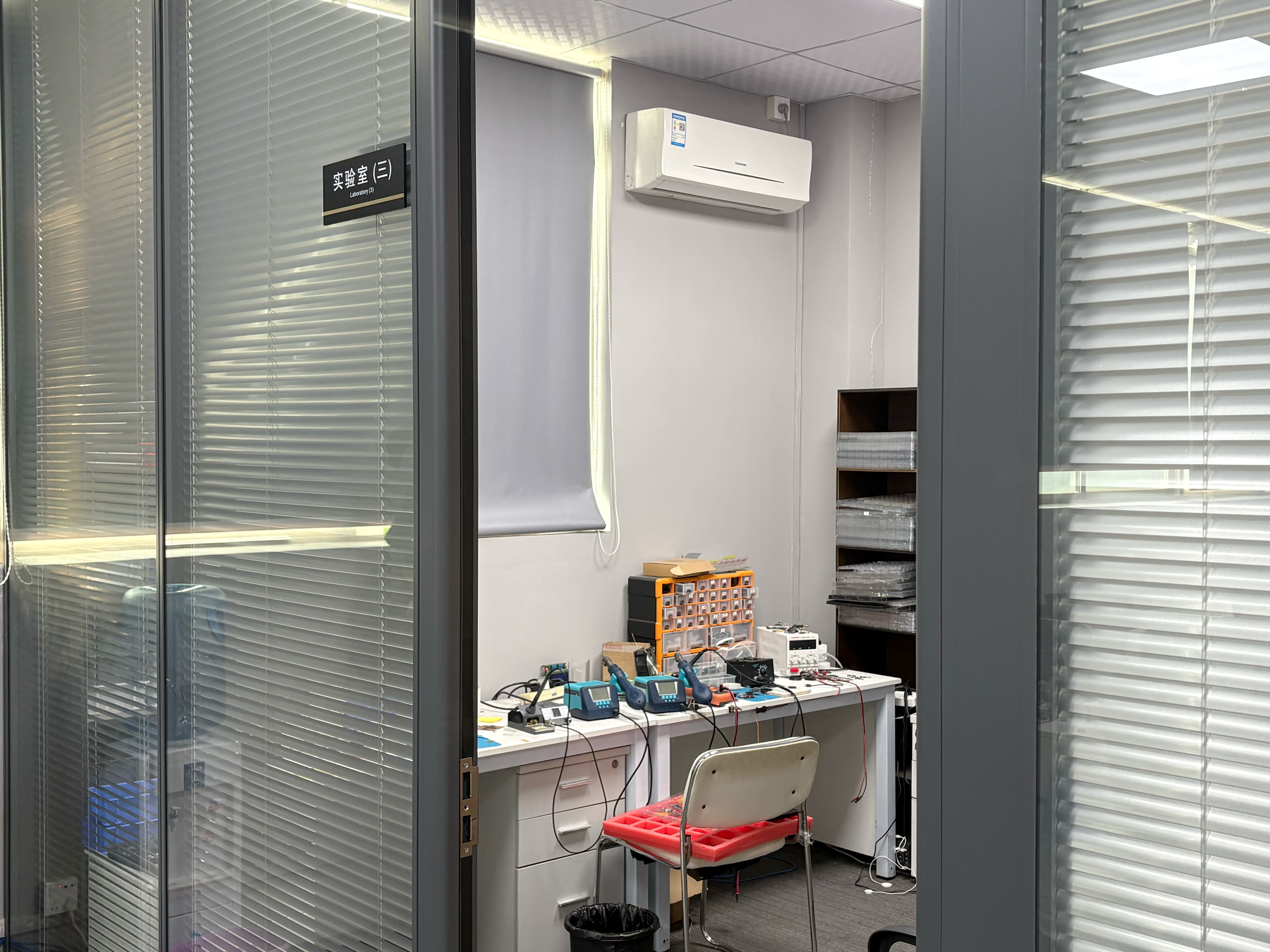
Industrial design, structural design, hardware solutions, Bluetooth main-control chip and UI design, the companion applications and a cloud health platform with third-party service integration are all described in our company materials. Manufacturing combines primarily self-produced complete devices with outsourced processing support — a distinction we state rather than blur, because a partner should know which steps are ours.
Verifiable company production and quality documentation is published as certificate titles with the unchanged original documents. It is not presented as a product authorization. The custom-development process itself is described on our OEM & ODM page.
Frequently Asked Questions
Questions buyers usually need answered first
Practical answers about product selection, everyday use and planning your project.
Visit the FAQ pageWho is responsible for certification and market registration when we sell under our own brand?
The organisation that places the product on a given market carries that market’s registration or listing duty, the label identity and the claim set it actually publishes. LUROGEF provides the device-level documentation applicable to the model and its directives, plus the label-artwork control interface. A production licence or a quality-management certificate is a factory and process document with a bounded scope — it is not a product authorization. No product on this site is claimed to be certified or registered in any market, and per-market requirements still have to be confirmed. Distributors evaluating this question should start with establishing market-authorization clarity for a territory.
What can we actually change to make the product ours?
Watch-face and UI design, app identity, industrial and structural design, hardware and software customisation, packaging composition, accessory presentation and label artwork control are all within the documented customisation scope. What still has to be confirmed in writing: SDK and API documentation, the exact customisation boundaries, supported languages, app publishing ownership, order quantity and schedules. The way to close that gap is scoping the brand layer in writing rather than in conversation.
What do you need from us before you can scope anything?
The target market or markets; the intended-use statement; the claim set you intend to publish; who owns the packaging and label artwork decision; the app publishing decision; your brand-layer decisions; and the expected shape of the programme. A project cannot be scoped honestly without these, and several of them determine what the product is legally allowed to say.
Which wearable platforms can we use for a private-label range?
The range includes blood pressure watches, the CARE2 smart ring and the S10 CGM system. Select the platform by the measurement you need, then review branding, packaging and software requirements.
What should we evaluate before approving a branded sample?
Evaluate fit, display readability, charging, app pairing, core functions and the unboxing experience. Compare the sample with the agreed specification and final artwork, and document any changes before releasing it for production.