Technical Article
CGM System Architecture: From Sensor to Display
A continuous glucose monitoring system is a chain, not a device. Something has to reach the compartment where the measurement exists; that contact has a finite life; the result has to leave the body; and it has to be turned into a number a person can read. This article walks that chain stage by stage — and is deliberate about which parts of it are established engineering and which parts belong to one specific product that is still awaiting documentation.
How to read this article
Two kinds of statement appear below, and they are kept visibly separate. The first kind is general industry principle — how this class of sensing works, attributed as such and not presented as a description of any particular product. The second kind is product-specific, and it is drawn only from the supplied evidence about this system's architecture. Where a product-specific value is unresolved, it is named as unresolved rather than filled from marketing material.
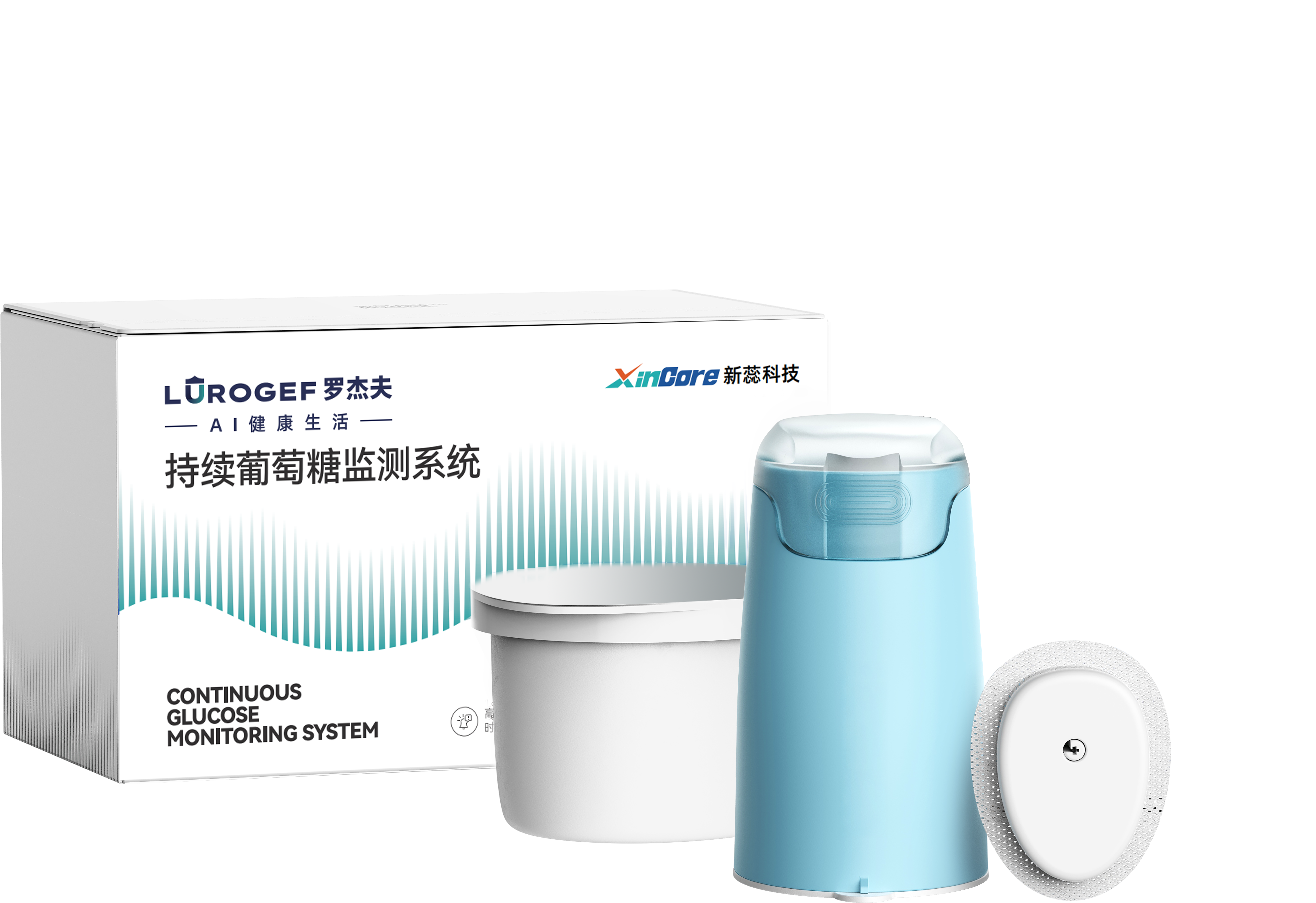
Concretely: the architecture described here is the documented architecture of this system — a separate adhesive sensor worn on the upper arm, and a display layer of a compatible watch and the companion application. The performance figures are published elsewhere in this cluster: a 15-day wear period per sensor, a reading every 3 minutes, and a published MARD of 8.32%. Those come from our own model documentation and are stated on the S10 system page. They are stated there rather than here because they are properties of a consumable, not design decisions — repeating them in an architecture walkthrough would blur the line between how the system is built and how well it performs.
The chain, stage by stage
Each stage below constrains the next. Skip one and the architecture stops making sense — which is exactly what happens when a marketing description collapses the sensor and the display into a single device.
- Stage 01
The measurement target decides the architecture
- The quantity a continuous glucose monitoring system is built around is not directly accessible from the surface of the wrist or the finger with the sensing classes a consumer wearable carries.
- The accessible compartment for a worn sensor is the fluid surrounding tissue cells, which is why the sensing element has to sit in contact with the body rather than read across the skin.
- This single physical constraint is why a CGM system is a worn sensor plus a display layer, and not a wrist device that reports glucose on its own.
The reason the sensor-versus-display boundary is an architectural fact rather than a marketing choice.
- Stage 02
Enzyme-based sensing: turning a reaction into a signal
- General industry principle, attributed as such: an enzyme-based electrochemical sensor uses a recognition element that reacts selectively with the target analyte.
- That reaction is transduced into an electrical current at an electrode, and the current is related to the amount of analyte present.
- The relationship is a calibrated one — the raw transducer output becomes a concentration only after conversion, which is why calibration is a specification item rather than a detail.
The mechanism class most commonly used in continuous glucose sensing. The sensing chemistry of this specific system is not yet confirmed and is not described here as if it were.
- Stage 03
The interstitial compartment and what it implies
- The fluid in the tissue compartment is not blood, so the relationship between its glucose content and blood glucose is a modelled relationship rather than an identity.
- That is why a system reading the tissue compartment is not interchangeable, value for value, with a laboratory blood measurement.
- It is also why the sensing element must be replaced periodically: the compartment is accessed by a filament that is in contact with tissue for the life of the sensor.
Common to continuous sensing architectures as a class; not a statement about any measured result for this system.
- Stage 04
Wear over a finite period
- A freshly applied sensing element does not reach its steady behaviour immediately; there is a settle-in phase between application and the point at which the signal is considered usable.
- The wear period is finite because the sensing interface degrades in tissue over time and because adhesion and site conditions change with washing, movement and skin response.
- This is why wear duration is a specification that requires validation documentation — it is a measured property of a consumable, not a design preference.
Explains why wear duration is a consumable property rather than a design choice. The published figure for this system is 15 days per sensor, stated on the S10 system page as our own documentation.
- Stage 05
Transmission to a display device
- The sensing element does not present its own result to the wearer; readings are transmitted wirelessly to a paired display device or companion application.
- Both the phone application and a connected watch can present synchronized values, which is what makes the display layer plural rather than singular.
- When the link is interrupted the correct output is a gap — not a carried-forward or interpolated value. A display that fills a gap silently is presenting a number nobody measured.
Link-specific parameters for this system — protocol, range, update cadence — are not published because no supporting documentation has been supplied.
- Stage 06
From raw signal to the number on the screen
- The raw signal is the transducer output: a current, before it means anything.
- The displayed value is the end of a chain that includes conversion, calibration against a reference, and processing intended to reduce noise or accommodate the lag between compartments.
- Every stage in that chain is a design decision, and the result is a representation of the measurement rather than the measurement itself.
The interpretation boundary: it explains why a displayed value should not be read as a laboratory-equivalent result or used as the basis of a clinical decision claim.
Why the display layer is not part of the measurement
Stage five is where most product descriptions go wrong, so it is worth stating plainly. The watch and the smartphone application are endpoints. They receive a stream and present it. Their contribution to accuracy is presentational: they can show a value badly, show it late, or show it during a gap, but they cannot improve a measurement they did not take, and they cannot take one.
This matters beyond precision of language. If a programme's product story treats the watch as a sensor, three consequences follow: the brand carries a claim the hardware does not support; the wearer forms an expectation about what happens when the sensor is not worn; and support teams receive questions the architecture cannot answer. The correct framing is stable and short — the sensor senses, the display presents, and a gap in the stream shows as a gap. The system overview carries that boundary alongside the itemised list of what is still pending verification for this platform.
Where this architecture stops
None of the following is a defect. Each is a boundary that follows from the physical design, and a programme that plans around them publishes fewer confusing results than one that presents every reading as equally authoritative.
| Limit | Why it exists | What it means for a programme |
|---|---|---|
| No optical path to the analyte from a wrist | The sensing classes carried by consumer wrist wearables do not access the compartment the measurement requires. | A system has to include a worn sensing element. Any product promise that omits it is describing hardware that does not exist. |
| Settle-in after application | A freshly applied sensing element takes time to reach its steady behaviour in tissue. | The first portion of a wear period is not equivalent to the rest. Programme onboarding has to account for it rather than treat the sensor as instantly reliable. |
| A finite wear period | The sensing interface degrades in tissue; adhesion and site conditions change with daily life. | Wear duration is a validated consumable property. Publishing it requires the document that establishes it — and planning replacement logistics requires it in writing. |
| Site and adhesion dependence | Signal quality depends on where the sensor is applied, how well it adheres and how the wearer behaves. | Application instructions are a product feature, not a leaflet. Poor instructions show up as programme attrition, not as a device fault. |
| Transmission gaps | Wireless links are interrupted by range, phone state and operating-system background policy. | Continuity has to be monitored with a defined threshold and a defined display behaviour during a gap. |
| Displayed value differs from raw signal | Conversion, calibration and processing sit between the transducer output and the screen. | The displayed number is a representation. Claims built on treating it as a direct measurement — diagnostic or accuracy claims in particular — are not supported by the architecture. |
| Compartment relationship is modelled | The tissue compartment is not blood; the relationship between them is a modelled one with an inherent lag. | Comparison against a blood reference is a validation activity with a protocol, not an assumption that can be carried into marketing copy. |
The interpretation boundary in one line: the displayed value is a processed representation of a tissue-compartment measurement, not a laboratory-equivalent blood result. Everything a programme says publicly should be consistent with that sentence. The words diagnosis, treatment and screening are not supported by this architecture and appear in this cluster only inside statements that they are not supported.
Where the numbers live, and why they are not repeated here
Four product-specific numbers would complete the picture above: the sensing method actually used, the wear period, the reading cadence and the transmission parameters. Three of them are published on the system overview and the S10 system page as our own documentation — a 15-day wear period per sensor, a reading every 3 minutes, and a published MARD of 8.32%. They are stated there rather than here because they are properties of a consumable, not architecture.
What remains genuinely open is the transmission layer: the interface your platform would consume has no confirmed inventory, so no integration pattern is described as available. That is a deliberate position rather than an omission — in a regulated device category, a number repeated without its source travels further and faster than the correction that follows it. The system overview names each open item so a partner can see exactly which document would settle it.
From architecture limits to programme boundaries
The chain above translates directly into decisions a partner makes once. Because the sensing element is worn and consumable, replacement logistics and application instructions are product features. Because the display layer is not the measurement, the product story is expressible in one sentence that survives translation into any market. Because the displayed value is processed, performance and diagnostic claims require documentation that does not exist yet — and saying so is a stronger position than publishing a figure the programme cannot defend.
Turning those boundaries into an evaluation, a documentation request and a claim register is the subject of our CGM evaluation guide. The current state of this specific system — what is documented, what is pending, and which parts are display-only — sits on the CGM & Connected Monitoring overview, and the component-level specification is on the S10 system page.
How to Evaluate a CGM System for Remote Monitoring Programs — architecture review, workflow ownership and the documentation set CGM & Connected Monitoring Overview S10 Continuous Glucose Monitoring System OEM & ODM development programmes Request the system documentation set
Frequently Asked Questions
Frequently Asked Questions
Questions buyers usually need answered first
Practical answers about product selection, everyday use and planning your project.
Visit the FAQ pageWhy does a CGM system need a sensor in contact with the body instead of reading optically from a wrist?
Because the quantity the system is built around is not accessible from the skin surface with the sensing classes a wrist wearable carries. The reachable compartment for a worn sensor is the fluid surrounding tissue cells, so the sensing element has to be in contact with the body. That physical constraint is the architectural reason a continuous glucose monitoring system is a worn sensor plus a display layer, rather than a wrist device that reports glucose on its own — and it is why any description of a watch or ring as measuring glucose is describing hardware that does not exist.
How does an enzyme-based sensing element turn a chemical reaction into a readable signal?
As a general industry principle — and it is described here as a general principle rather than as a verified description of this specific system — an enzyme-based electrochemical sensor uses a recognition element that reacts selectively with the target analyte. That reaction is transduced into an electrical current at an electrode, and the current is related to how much analyte is present. The relationship is a calibrated one, so the raw transducer output becomes a concentration only after conversion against a reference. Calibration is therefore a specification item, not a footnote.
What is happening to the sensor across a wear period, and why is the wear period finite?
A freshly applied sensing element does not reach its steady behaviour immediately — there is a settle-in phase before the signal is considered usable. The wear period ends because the sensing interface degrades in tissue over time and because adhesion and application-site conditions change with washing, movement and skin response. That is why wear duration is a measured property of a consumable rather than a design preference. The published figure for this system is 15 days per sensor, stated on the system overview as our own documentation.
How does the reading get from the sensor to the screen, and what happens if that link breaks?
The sensing element does not present its own result; readings are transmitted wirelessly to a paired display device or companion application, and both a phone app and a connected watch can present synchronized values at the same time. When the link is interrupted, the correct output is a gap. A display that carries a value forward or interpolates across a gap is presenting a number nobody measured, which is why transmission continuity is a programme concern with a defined threshold rather than an intermittent support ticket. Link parameters for this system are unpublished.
Is the number on the screen the same thing as the raw sensor signal?
No. The raw signal is the transducer output — a current, before it means anything. The displayed value sits at the end of a chain that includes conversion, calibration against a reference, and processing intended to reduce noise or accommodate the lag between the tissue compartment and blood. Every stage in that chain is a design decision, so the displayed number is a representation of the measurement rather than the measurement itself. That distinction is why treating it as a laboratory-equivalent result, or as the basis of a diagnostic or accuracy claim, is not supported by the architecture.